 Results for People and Place, my third course at Level 1 at OCA, were somewhat less than my previous two courses. I was expecting this, so nor major disappointment, though I am surprised that my concerns were so easily dismissed, this time by an assessor, who claims – despite the lack of evidence in the course materials – that conceptual approaches are a core element of Level 1 courses. I have written to OCA to seek clarification on this matter, but will have no satisfaction. I can file a complaint, but marks cannot be changed. How’s that for fairness? Only students can make mistakes.
Showing posts with label Reflection. Show all posts
Showing posts with label Reflection. Show all posts
Friday, January 15, 2016
Moving on from Level 1 ... and OCA
Results for People and Place, my third course at Level 1 at OCA, were somewhat less than my previous two courses. I was expecting this, so nor major disappointment, though I am surprised that my concerns were so easily dismissed, this time by an assessor, who claims – despite the lack of evidence in the course materials – that conceptual approaches are a core element of Level 1 courses. I have written to OCA to seek clarification on this matter, but will have no satisfaction. I can file a complaint, but marks cannot be changed. How’s that for fairness? Only students can make mistakes. 
Tuesday, September 15, 2015
Reflection on People and Place
P&P is my third photography course with OCA. I received above average marks in assessments for The Art of Photography (Nov 2013) and Digital Photographic Practice (Nov 2014).
While a new course usually brings new challenges and different experiences, my time on People and Place was unique in several respects.
While a new course usually brings new challenges and different experiences, my time on People and Place was unique in several respects.
Wednesday, September 9, 2015
Suggested Reading/Viewing: Text with Image
The suggested items were intended to illustrate the use of text with images.
 Janet Cardiff – Alter Bahnohoff Video
The tutor provided a link to an eight-minute excerpt from the full 26-minute film, a project within a project, in which the camera records someone viewing a film on a mobile device. The point of view is the viewer. All we see of the viewer is his right hand holding the mobile device. The film being watched was shot in the same train station in which the viewer is standing. As the view in the film moves around the station, so too does the viewer, creating a film within a film. This is an intriguing idea, but after you figure out what is happening, there is little left to see and you are left to follow the narration, which I didn’t find particularly engaging. This is an example of aural text.
http://www.cardiffmiller.com/artworks/walks/alterbahnhof_video.html

The tutor provided a link to an eight-minute excerpt from the full 26-minute film, a project within a project, in which the camera records someone viewing a film on a mobile device. The point of view is the viewer. All we see of the viewer is his right hand holding the mobile device. The film being watched was shot in the same train station in which the viewer is standing. As the view in the film moves around the station, so too does the viewer, creating a film within a film. This is an intriguing idea, but after you figure out what is happening, there is little left to see and you are left to follow the narration, which I didn’t find particularly engaging. This is an example of aural text.
http://www.cardiffmiller.com/artworks/walks/alterbahnhof_video.html
Monday, August 24, 2015
Suggested Reading/Viewing: Conceptual Approaches to Space: Sternfeld and Alys

The tutor suggested having a look at these two projects for ideas on how one might develop a conceptual approach to photographing space.
Joel
Sternfeld – High Line Series
The
tutor pointed to this as an example of an investigation into the allocation of public space. I don’t have a copy
of the book associated with this project, nor access to an exhibit. I have seen a few online reviews and videos
and what I found immediately remarkable is that Sternfeld does not speak of
representing his work as conceptual. In
the video referenced here, he speaks of the wonder and awe experienced shooting
this bit of nature-in-the-city, but nothing to suggest that he sees his work as
anything more than what it appears, images of urban landscapes. Perhaps he has spoken of concept elsewhere.
New
York Voices: Joel Sternfeld
A
Walk on the High Line
Thursday, August 20, 2015
Shoot like no one is ever going to look at the picture
Why not? Of course, I'm not a commercial photographer, in which case I would have to worry very much about what the client thinks.
To often we are bogged down by the need to conform to what is expected, or how a location has been shot before but my message to you is simple; create what makes you happy, don't worry about how many "Likes" you get or whether the judge at your local club will examine it, missing the point and give you a low score.
Shoot from your heart, stay true to what you want to capture and enjoy making the images that bring a smile to your face.
I always remember a phrase "Dance like no one is watching" I apply this to my photography; "Shoot like no one is going to see it" and then you can fully express yourself without fear or doubt.
If you shoot like that you'll find your work gets noticed for the right reasons.
http://www.paulsanders.biz/blog/2014/5/seeing-things-differently
#
Wednesday, August 19, 2015
I don't wish to deconstruct your vision
The postmodern in photography didn't much resonate until recent reading in The Education of a Photographer. What struck me were repeated expressions, in regard to questions of intention, of a desire to trick the viewer, to make the audience question what was being viewed and how it constructed meaning from the viewing.
Wednesday, June 17, 2015
Exhibits
 |
| NYC Boy with Ribbon 1939 Helen Levitt |
I'll be in the USA for a couple of weeks this summer and have found the city art museum is holding an exhibit of 30 Helen Levitt images. 30. Tickets are $20.00, parking will be $10.00, plus gasoline and the stress of an hour's drive either way. Forget it. Here are 50 images and I don't even have to get up from where I'm now sitting. Can anyone say I've missed anything essential by not seeing the printed images hung on a wall?
#
Monday, January 5, 2015
Shooting on holiday: Istanbul

Last week I was in Istanbul with my camera. I pressed the shutter close to 1000 times in 6.5 days of wandering the city, the most I’ve used a camera in months. Initially I found myself out of practice. I had to refamiliarize myself with the mechanics of the camera, with which buttons controlled which functions. I then had to remind myself to slow down and think through my situation, what I was attempting to capture, and how I might best achieve this. It was in many ways a frightening experience – My god, look at what I’ve lost! On reflection, though, it was also inspiring – Look at how much I’ve learned and how much comes back with just a little thought and application!
Sunday, May 18, 2014
I can't figure it out

That's what the man said as he was getting in his car. What are you photographing?
The tree, I said.
Is it so interesting?
That's what I'm hoping to find out.
And he drove away.
#
Friday, August 30, 2013
Damn: Photos of monks meditating
Yesterday I had this very idea. A few hours later - bam! - there it was in my FB news feed.

In his latest work, Junsik Shin, a recent photography graduate of New York City’s Parsons School of Design, takes his camera into the Zen temples of America and his native Korea. In his most recent project, entitled “Ee Mut Ko?” (“What Is This?”), his eye follows not the ornate interior artwork or the sweeping curves of the temple architecture, but the monks themselves, absorbed in meditation. It is both an utterly familiar subject and an unexpectedly fascinating one, for who would have thought that the thing itself, sitting meditation, could be so visually arresting?
The Still Point
Capturing the movement of the mind
In his latest work, Junsik Shin, a recent photography graduate of New York City’s Parsons School of Design, takes his camera into the Zen temples of America and his native Korea. In his most recent project, entitled “Ee Mut Ko?” (“What Is This?”), his eye follows not the ornate interior artwork or the sweeping curves of the temple architecture, but the monks themselves, absorbed in meditation. It is both an utterly familiar subject and an unexpectedly fascinating one, for who would have thought that the thing itself, sitting meditation, could be so visually arresting?
Wednesday, August 21, 2013
Borrowing Ideas
Back from summer holidays and it's time now to get everything into shape for assessment submission. In the meantime, I thought I'd note a couple of ideas worth borrowing.
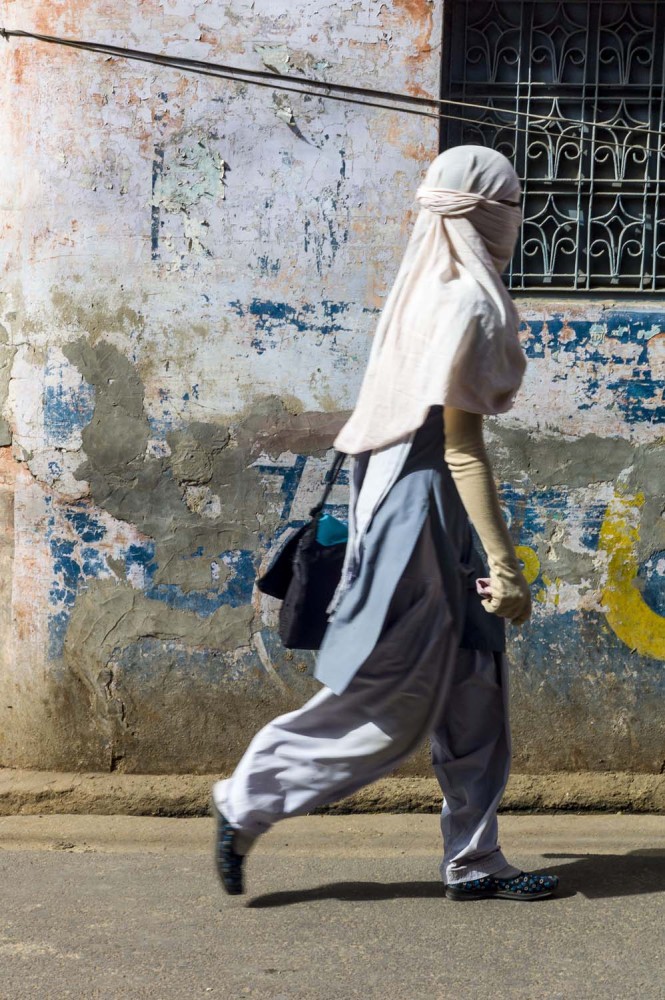 The first is from Michael Rubin, who used a wall as his subject, shooting everything that passed in front of it in the course of some hours. I could easily do the same in my neighborhood with a wall, a corner, a train station, or some other suitable landmark. I'll be keeping an eye out for location on my future forays.

The first is from Michael Rubin, who used a wall as his subject, shooting everything that passed in front of it in the course of some hours. I could easily do the same in my neighborhood with a wall, a corner, a train station, or some other suitable landmark. I'll be keeping an eye out for location on my future forays.
The second is from Jacob Aue Sobol, a Magnum photographer whose latest project is built around the idea of taking massive number of thematically related images within a short time. Sobol did a 30-day ride on the Trans Siberian railway, shooting 1000 images a day. His girlfriend filmmaker did the initial selection of 100 images per day while riding the train. Together they winnowed this selection to 20, leaving them 1200 images on arrival in Beijing, from which they made a final cut of 60.
I'm thinking I could do something similar here, driving across the UAE, say all seven Emirates in 10 days. What I would need is a driver, as doing both might be a bit too much. I could edit in the car or at camp sites, and have a presentation ready on arrival on Day 10.

#
Sunday, August 4, 2013
Photography Prohibited
 |
| Manjushri (Enryakuji) |
Yesterday I visited Kyoto’s Toji, The East Temple. It’s been on my to-visit list since completing
my pilgrimage of Shikoku several years ago. With a couple
of exceptions, the 88 temples along the 1200km route belong to Japan’s Shingon
school of Buddhism, a Tantric school established in the 9th century by Kukai. Toji was the master's base in Kyoto and the first Tantric
temple in the capital. Toji is also unique
for housing a large collection of rare sculpture and paintings, much of it
brought by Kukai from China.
Monday, July 22, 2013
A different way of seeing photographs

Yesterday my wife and I were sitting in department store waiting for my in-laws. My wife pulled out a yoga guide she had just purchased and started flipping through it. Each two page spread features step-by-step directions for one yoga pose, illustrated with a series of a dozen images. As I looked over her shoulder while she flipped through the book, what I began to see was what a huge (and probably tiresome) photography job this book represented. Altogether the book must feature hundreds of such photos. This has nothing at all to do with the layout and design of the book, simply the work that went into capturing and editing all the images.
#
Wednesday, July 17, 2013
Looking at paintings: French impressionists from the Clark
 |
| Théodore Rousseau, Farm in Les Landes, 1844–67 |
But here I am in Japan. My wife is on a two-day whirlwind visit to Kyushu, and the in-laws felt obliged to show me a good time. There isn't a whole lot to see or do in Kobe, but fortunately a special collection was on at the Hyogo Prefectural Museum.
Saturday, June 1, 2013
Do newspapers need photographers?
This was the title of a NYTimes blog post in reaction to yesterday's news out of Chicago, quoted below. Could we ask the same question about writers? Editors? It doesn't seem freelancers with iPhones can so easily substitute for years of experience, local connections, extensive training, and commitment to community and professional ethics.
A Chicago journalist believes this may be management strategy to rid the company of the mostly unionized photographers, to be replaced in the not so distant future with cheaper part-timers or freelancers at a later date.
A Chicago journalist believes this may be management strategy to rid the company of the mostly unionized photographers, to be replaced in the not so distant future with cheaper part-timers or freelancers at a later date.
Wednesday, May 8, 2013
Which way to go?
I feel best about my photographic practice when I'm not reading the opinions of others. Inevitably when exposed to these, I get anxious and distraught. I think I should be doing something differently, that my practice is somehow deficient, that maybe I'll never learn anything and I ought to just give up and do something else.
Should I be planning my work, or should I let the work emerge from my time with the camera? Perhaps there is some balance to be found here. I tend to like working spontaneously, seeing what the camera reveals. I don't like faffing about with all the dials and controls, but perhaps that's because I don't have a strong vision, because I don't see any images I want to produce. Maybe it's because all that faffing about requires quite a lot of knowledge and practice to get right and having them only in small quantities I get frustrated and retreat.
This may also be part of my character and habit. I don't spend lots of time on any one thing. I move around a lot. I change jobs. I don't have a lot of long-term relationships. I prefer variety, uniqueness, spontaneity. For me the camera has been a tool of exploration. With it in hand, I have reason to get out and visit a neighborhood, a village, a landscape. The process of creating images involves me in place. It helps me look at and evaluate in ways different from walking around without a camera.
I think the key here is persistence. Working repeatedly and diligently the knowledge and skills slowly accrue. The key is to keep moving, keep thinking, keep exploring.
And not listen too closely to the gaggle of opinion.
Should I be planning my work, or should I let the work emerge from my time with the camera? Perhaps there is some balance to be found here. I tend to like working spontaneously, seeing what the camera reveals. I don't like faffing about with all the dials and controls, but perhaps that's because I don't have a strong vision, because I don't see any images I want to produce. Maybe it's because all that faffing about requires quite a lot of knowledge and practice to get right and having them only in small quantities I get frustrated and retreat.
This may also be part of my character and habit. I don't spend lots of time on any one thing. I move around a lot. I change jobs. I don't have a lot of long-term relationships. I prefer variety, uniqueness, spontaneity. For me the camera has been a tool of exploration. With it in hand, I have reason to get out and visit a neighborhood, a village, a landscape. The process of creating images involves me in place. It helps me look at and evaluate in ways different from walking around without a camera.
I think the key here is persistence. Working repeatedly and diligently the knowledge and skills slowly accrue. The key is to keep moving, keep thinking, keep exploring.
And not listen too closely to the gaggle of opinion.
#
Tuesday, March 19, 2013
Credit - where credit is due
I was recently reviewing an exhibit catalog of Asian art and while looking through the credits was struck by the neglect shown to the person most responsible for the contents of the book. The title page has the name of the exhibit, the name of the museum, the name of the curator (in bold), and the names of eight essay contributors. At the back of the book there is a separate Contributors page in which brief bios are provided of each of these nine people. The exhibit consists of approximately 300 items, photographically reproduced within the pages of this book. Who is responsible for the photos? That information is relegated to the Acknowledgements page. After five paragraphs of thank you's, there is, in smaller type at the bottom, a section titled Reproductions, in which we at last find the name of the photographer.
Is it because the photographer is viewed as a technician that he doesn't rate the same credit as the essayist? Is this treatment typical at art institutions?
#
Saturday, March 16, 2013
Stay on the bus
A bit inspiration passed on from someone at the OCA forum. I have to say I often feel this way, wondering why I bother to take photos when it has all been done before. Photographer and educator Arno Rafael Minkkinen suggests you do what you like, keep on doing it, and out of the process a unique vision will one day emerge.
Thank you, Arno.
And so, if your heart is set on 8×10 platinum landscapes in misty southern terrains, work your way through those who inspire you, ride their bus route, and damn those who would say you are merely repeating what has been done before. Wait for the months and years to pass, and soon your differences will begin to appear with clarity and intelligence, your originality will become visible, even in the works from those very first years of trepidation when everything you did seemed to have been done before.
Thank you, Arno.
Thursday, January 31, 2013
Road sign colors

One of the images I captured for my exercise made me consider - why are highway signs blue? I googled a bit and found regional and country-specific standards. It seems in Europe and the US, highway directional signs are green, but in Europe non-highway (or on-motorway) signs may be green though in several countries they are blue. Besides the color scheme, there are also standards for shapes. Triangles and diamonds, for example, typically carry warnings.
How were these decisions made? Was there any research done to suggest certain colors or shapes are related to particular modes of discourse or states of mind? The lack of uniformity across countries suggests the system grew organically and only later as drivers began motoring in other countries was some kind of uniformity required.
#
Sunday, January 27, 2013
You are not a photographer
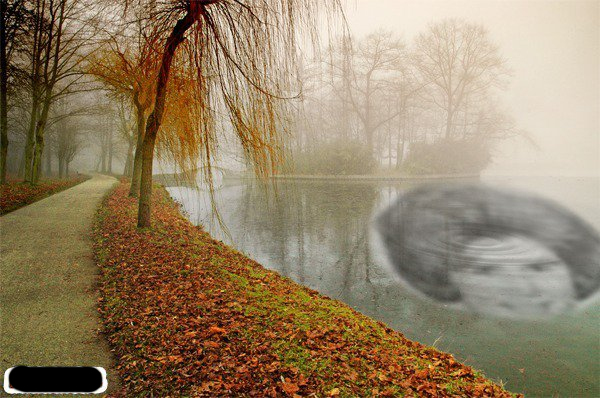
These days everyone has a camera and post-processing software. This has encouraged some to think they have all the tools required to launch a photography business. Hilarious results are collected at You Are Not a Photographer. While anyone who aspires to be a professional has to go through a period of producing poor images, they must be prepared, when claiming to be professional, to compare their skills and products with those already established as such. Taking a shot at them here doesn't seem at all unfair.
Subscribe to:
Posts (Atom)