Showing posts with label DPP. Show all posts

Friday, July 18, 2014

DPP Reflection

DPP has been a productive course.  Among the changes and improvements in my practice are some of the following.

Greater awareness of workflow. Much of what I did in DPP I learned how to do in TAOP.  The difference was in making assumptions explicit and working through justifications for how the work is accomplished.   
Greater confidence.  Feelings of adequacy vary from project to project, or even day to day, but having now completed 10 assignments and 50 exercises across two courses, I feel I have more confidence in the ability to produce good, if not brilliant, photographs. 
More experience.  On DPP I began using Photoshop, as well as Illustrator and In Design. I’ve also explored Silver Efex Pro.  I have put a bit of time into printing and now have a working relationship with three area printers.   
Lighter wallet.  The course required a substantial financial investment.  I spent nearly £700 on software and training, £200 on prints and shipping, and £100 on books. 

Tuesday, July 1, 2014

Assignment 5: Personal Project: Being a Tree in Dubai

Feedback is in and it's all good. My reflection is posted right (as a jpg). The original submission can be found after the break.

DPP is done.

Tuesday, June 17, 2014

DPP: Exercise 25: Gallery Review

This exercise calls for a review of online photography galleries.  I've taken this to mean the websites of professional photographers, which quite naturally feature image galleries.  The purpose of this review is preparation for establishing my own website, an optional activity that I am forgoing for reasons explained below. 

For the review, I have chosen to look at the websites of four professionals discovered while researching my latest assignment on trees.  All are engaged in some type of nature photography:  Clive Nichols is known for his garden and flower images;  James Balog most recently for his work on the disappearing ice of Antarctica;  Edward Parker for his travel and nature images; and Charlie Waite for his landscapes. 

Tuesday, June 10, 2014

Review: Reynaud, Francoise. The tree in photographs. Los Angeles: J. Paul Getty Museum, 2010. Print.

This slim volume is the product of a 2011 exhibit at the J. Paul Getty Museum, Los Angeles.  In Focus: The Tree was jointly curated by Anne Lyden, associate curator in the Department of Photographs at the Getty Museum, and Françoise Reynaud, curator of the photographic department of the Musée Carnavalet.  Book authorship is credited to the latter as she produced the essay with which it opens. Unfortunately this is rather less a reflection on trees as it is a collection of descriptions that would have been more helpfully placed in some proximity to the images.  As designed and edited, the reader is left to flip back and forth between the essay and the plates.

According to Reynauld, the selection process was based on “the power of the image, the beauty of the compositions, the interest of the represented scene, and the quality of the original print.”  [p7]  In an article at the Getty Center’s online magazine, she writes:

Monday, June 9, 2014

Review: Wells, Photography: A Critical Introduction: Ch 6: On and beyond the white walls: Photography as Art , 4th ed, 2009

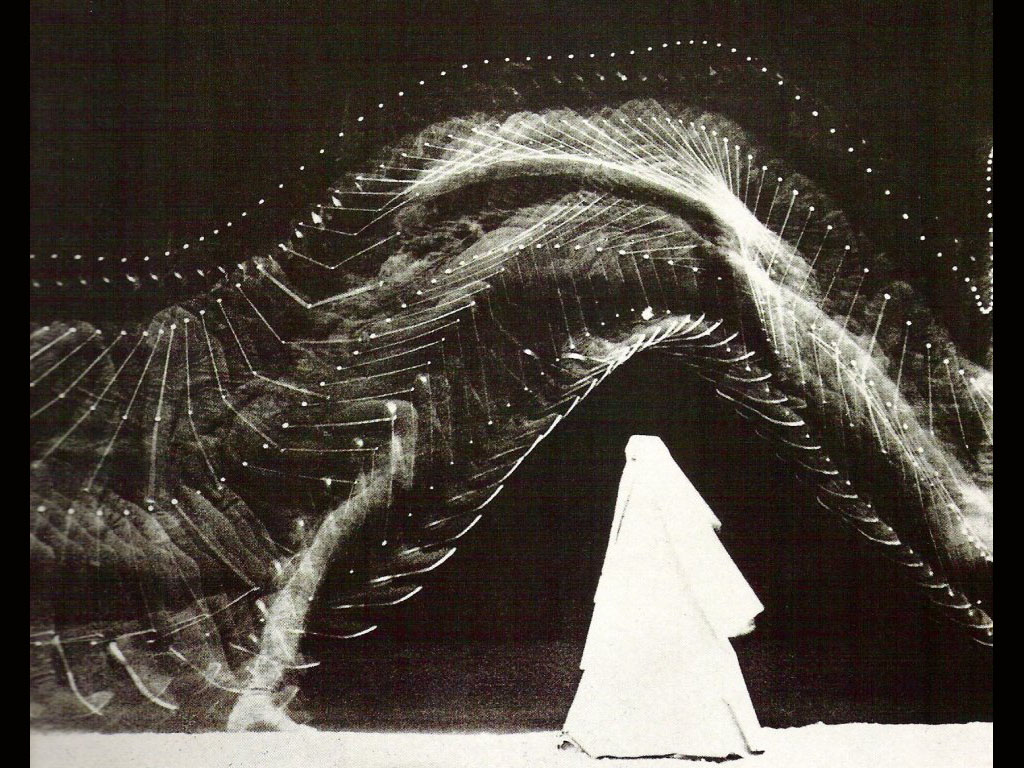
1pecha_marey.jpg
An example of Etienne-Jules Marey's 
chronophotography
This chapter looks at photography as Art, which Wells defines as “the web of practices relating to the Arts establishment (galleries, museums, public and private sponsorship, auction houses...) by contrast with more general understandings of photogrpahy as an ‘art’ or expressive skill.”  p259

From its inception there has been debate about the nature of photography.  Technology and art were considered distinct categories and photography successfully blurred the line.  Initially the emphasis was on the science, but as those trained in traditional art techniques began to produce photographs, the scope of photography widened.


Sunday, June 8, 2014

Review: Master Photographers: Ansel Adams, BBC, 1983

Master Photographers is a 1983 series from the BBC profiling six photographers:  Alfred Eisenstaedt, Bill Brandt, Andreas Feininger, Jacques Henri Lartigue, Andre Kertesz, Ansel Adams.   The series format has the subject in his studio or office with a stack of preselected printed images.  Interviewer Peter Adam (not identified in the films or the credits) asks questions while the subject discusses the photos he has prepared.

I began this series more than a year ago (in February 2013) and thought, with only six 30-minute episodes, I would finish it rather quickly.  It seems there were other things to do along the way.

Wednesday, June 4, 2014

DPP Assignment 5: First edit and first print

After shooting at least a couple hundred images of trees, plants, and bushes in the Jumeirah, Satwa, and Zabeel neighborhoods, I selected approximately 30 images to post-process in Ps.  This was my first effort to do this entirely in Ps.  The workflow went something like this:

Tuesday, June 3, 2014

DPP: Exercise 24: Sharpening for Print


This exercise is intended as an experiment in sharpening, both for screen and print.  I expect I will be adding to this over the next two weeks as I experiment with new software, but for now I present the results of my first trial.

Friday, May 30, 2014

Review: Parker, Edward. Photographing trees. Richmond, Surrey, England: Kew Pub., 2012. Print.

This is a beautiful book as much about the love of trees as it is about how to photograph them.  The author is a well-regarded photographer whose images have been published in many well known publications such as National Geographic. He has also written a book on ancient trees, and contributed photos to a survey of some of the most important plants in human culture.  Here he looks back on three decades of nature photography, offering a collection of some of his best images as well as tips on how you, too, can produce beautiful tree photographs.

This is not, however, a book for photography professionals, but more an every-man’s guide to making good photos and appreciating the beauty of trees.  Parker says that used correctly, the compact point-and-shoot can produce similar quality images to equipment costing thousands of dollars.

Wednesday, May 28, 2014

Examples of DPP Assignment Five

As the only stipulation for the assignment is to produce 10-12 images on a theme of choice, the variety of subjects is to be expected, but what is surprising are the variety of approaches.  Here we have a student who decided to limit his shooting to one location on one day.  His presentation is as bare bones as his approach.  At the other extreme, we have this student who spent fours months revisiting the same location, this student who has created a narrative with descriptions and poetry, and this student who seems to have curated her assignment from a 12-month collection of images.

Here are a few more at which I had a look:

     Link       Link       Link

#

Sunday, May 25, 2014

Perspectives on Trees

Myoung Ho Lee, from a gallery at NYTimes
Following on from my last post reviewing tips and techniques for photographing trees, I have found a few articles reviewing photographic projects focused on trees, two of them specifically in New York City.

Saturday, May 24, 2014

Photographing Trees: A Review of Advice Found on the Internet


Having begun my project of photographing trees in my Dubai neighborhood, I was interested in advice from fellow photographers.  A search of the internet returned a number of articles offering much the same tips and hints, outlined below. Their implied approach seems to be creating beautiful images.  Not one of them considers the possible work of botanists or landscape documentarians.  The emphasis is on using trees to create aesthetic products, rather than learning about nature or the environment.  Only one of the photographers included here mentions learning something about botany, but is quick to remind readers beautiful photos can be made without it.  

Wednesday, May 21, 2014

Assignment 5: Planning

I've been in touch with the tutor with several possible themes and he's given his approval to all, leaving the decision to me.  He did note, however, a preference for color to monochrome.

I live on Dubai's main thoroughfare, a 10-lane highway, and had thought to do a series on the billboards that take up huge amounts of space and flash commercial messages to the thousands of drivers flying past.  The idea was to Photoshop in oppositional readings in the form of graffiti.  I still like the idea, and while shooting the images will be fairly straightforward, the manipulation will take more time than I've got if I wish to finish this course before July.  I'm also afraid of having to force certain images in order to meet a deadline, instead of waiting for just the right bit of text to run with an image.

I've therefore decided to follow on with a series of tree portraits.  Some of the stronger images from Assignment Three were of trees and this has inspired me to carry on.  I would dearly love to drive around the country and shoot all kinds of trees, but because of time I'm going to focus on my neighborhood and the adjoining areas, places I can get to - and get back to - easily.  So far I"ve shot a couple of strong images, so I'm already on my way.

#

Tuesday, May 20, 2014

Assignment 4: Reality and Intervention

Included in this blog post in reverse order are copies of three documents:  1) the original assignment report;  2) reflection on tutor notes;  and 3) revised assignment report.  


Revised Submission


Photoshop Training Examples

I've been on the course for three weeks, 2 hours a day twice a week.  Here are some examples of the skills and materials we have been working on.


Filter effects

Sunday, May 18, 2014

I can't figure it out


That's what the man said as he was getting in his car. What are you photographing?

The tree, I said.

Is it so interesting?

That's what I'm hoping to find out.

And he drove away.

#

Saturday, May 17, 2014

Review: Wells, Photography: A Critical Introduction: Ch 7: Photography in the age of electronic imaging , 4th ed, 2009

http://www.whattheduck.net/


Chapter author Martin Lister, professor Visual Culture at University of the West of England, Bristol (same institution as Michelle Henning, chapter four author on Photography and the Human Body).

Lister notes that in this book’s many editions this chapter has been most heavily edited, reflecting the rapidly changing nature of digital imaging technology.  When digital first arrived there was some question as to how it would affect photography.  Today digital is the norm, completely supplanting analog, while film has become a niche practice.  Among the changes he observes:

Monday, May 12, 2014

Review: BBC: Vivian Maier: Who Took Nanny's Pictures? (2013)


VM1972-75K05874-07-MC
Maier, Self-portrait
A 70-minute introduction to the life and work (of what is so far known) of the American-born, French-raised photographer who left behind 100,000 negatives and who in her lifetime never published or exhibited.  In fact, almost no one ever saw her photographs until she was near dead and she wasn’t recognized as an auteur until she was. 

Joel Meyerowitz observes that not publishing her work is after all not so surprising.  He believes that after years of regular practice, capturing images for oneself is enough.  This is the way one comes to relate to the world and the opinion or praise of outsiders is no longer necessary.

What remains so remarkable and fascinating is the commitment to visual documentation, to day after day, year after year, seeking out the world’s detail, not only in the world where she found herself, but in far flung locations she sought out. In my own work it sometimes seems difficult to raise the energy to get out there for another day of shooting.  Perhaps Vivian had those days, too.  Her perseverance is inspiring.  

So, too, is her independence.  She apparently never married, but in her job kept surrogate families.  It seems what she may have valued most was her freedom, the ability to move around, to have a relationship, but also to walk away.  

The film can be viewed online here:  http://www.veoh.com/watch/v70590131KFPFjY7N

#

Sunday, May 11, 2014

Review: Wells, Photography: A Critical Introduction: Ch 5: Photography and Commodity Culture , 4th ed, 2009, CONT

From Posner's Spray It Loud
Ramamurthy reviews Barthes on denoted and connoted messages.  Denotation is the most obvious reading, the surface reading, the fact of the photo.  The connotation is inferred, is symbolic, and is also, for the advertiser, the more important level of meaning.  Stuart Hall (1993) reflects on how messages are encoded and decoded, observing that for images to be successful, producers and consumers have to share a common frame of reference, a similar schemata.  This is why corporations most always craft their advertising locally, in order to be able to speak to consumers effectively.  Ramamurthy cites Posner’s Spray it Loud for examples of oppositional readings (trying to find a copy of this now).

Friday, May 2, 2014

Review: Wells, Photography: A Critical Introduction: Ch 5: Photography and Commodity Culture , 4th ed, 2009

Chapter author Anandi Ramamurthy is a lecturer in Media and Cultural Studies, Central Lancashire University.

Starts with a great quote from Debord (1967):

In societies dominated by modern conditions of production, life is presented as an immense accumulation of spectacles.  Everything that directly lived has receded into a representation. 

Media messages present a glamorous world of sensual experience crafted to minimize conflict.  The camera and photography support the global economic order in two ways:  through creation of presentation of spectacle, and as a tool for surveillance.  Images prod
uce a ruling ideology.  The freedom to consume these images is imagined as freedom itself.   (Sontag 1979: 178-79)

Cites Tagg (1988) on development of portrait photography as part of the development of commodity culture.  The mid-19th century boom in portraiture tapped into the desire to emulate the wealthy and eventually spread across all levels of society.  The demand for portraits possibly stifled creative use of the camera.  President Lincoln used a carte-de-viste as a campaign tool and credited it with his electoral success.

Photo:  Mathew B. Brady. Abraham Lincoln on the day of his speech at the Cooper Union, February, 27, 1860. Carte-de-visite photograph. James Wadsworth Family Papers, Manuscript Division, Library of Congress (046) Digital ID # al0046

Photographer Mathew Brady took this portrait of Abraham Lincoln at his studio in New York City on the same day that Lincoln gave his now-famous Cooper Union address. Brady retouched the photograph, smoothing facial lines and straightening his subject’s “roving” left eye. The effect was striking, and what Lincoln jokingly referred to as his “shadow” later appeared on hundreds of campaign buttons, posters, and small printed cartes-de-visite. http://www.loc.gov/exhibits/lincoln/the-run-for-president.html